The meticulous historical and theological study carried out by the reigning Prince-Abbot, His Most Reverend Highness Giovanni Luca (born Gianluca de Lucia), has shown that the ideas of Giorgio Carbone aimed at reconstituting a principality at Seborga, still upheld by his successors and today led by Mrs Nina Dobler, are largely historical forgeries. The most eclectic of these forgeries are set out below.
1). Seborga is said to have become an imperial monastic principality as early as 1079.
False. The territories given by Count Guido di Ventimiglia to the Benedictine monks of Lérins in 954 became an abbatial principality — that is, governed by a prince-abbot — in 1261, the year in which the statutes and regulations of the principality were officially drawn up. We may therefore state that the principality of Seborga is an invention of Giorgio Carbone for local tourism purposes and has no counterpart in the Principality of Sabourg founded by the monks of Lérins.
2). The Templars, some of whose Grand Masters are said to have passed through Seborga, are said to have laid down their swords there and become monks.
False. The presence at Seborga of a chapel dedicated to Saint Bernard and of an oratory raised in honour of Saint John of Matha in no way links the Knights of the Temple or the Hospitallers to the monks of Lérins, founders of the Principality of Sabourg. Bernard of Clairvaux as Grand Master of the Order of the Templars after Hugues de Payns: these are ideologies invented by Giorgio Carbone and supported by no historian worthy of the name. How could an abbot who became a bishop and Doctor of the Roman Catholic Church have borne a knight's arms? That would be heresy. Finally, it should be noted that the chapel today dedicated to Saint Bernard of Clairvaux was apparently dedicated to Saint Bernard of Menthon before Carbone's time.
3). The deed of sale of 30 January 1729 is said never to have been registered.
False. The deed of sale of the territories of the Principality of Sabourg, authorised by Pope Benedict XIII in 1728, drawn up and registered in Paris on 30 January 1729, is kept in the State Archives of Turin. That deed is without effect, since it gave rise to the Savoyard Protectorate over the territories of the Principality of Sabourg, exercised until 1946.
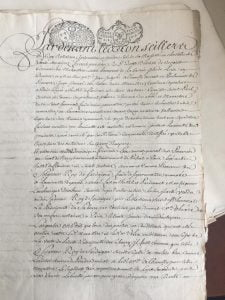
4). The deed of sale of 30 January 1729 is said to have concerned mere possession of the territories of Seborga and not sovereignty over them.
False. This deed of sale establishes the transfer of the territories of Seborga and its dependencies, such as the chaplaincy of Saint Michael (today the church of Saint Michael in Ventimiglia), and of the titles of nobility held by the abbots of Seborga and Lérins.
5). The Prince at Seborga should be elected by the people of Seborga, given that the monks left Seborga three centuries ago. According to Giorgio Carbone, Marcello Menegatto and Nina Dobler, the right to elect the Prince of Sabourg would belong to the citizens or residents of Seborga; according to Dr Diego Beltrutti, it would belong to the Knights of the Sepulchre of Seborga, known as the White Knights of Seborga, founded by Giorgio Carbone.
False. From a legal standpoint it is not possible to transfer to third parties a right that was the exclusive prerogative of the monks. In this context the monks left the Priory at Seborga and the Priory of the Chaplaincy of Saint Michael in Ventimiglia following the deed of sale of 1729 in Paris, but their departure in no way abolishes the right of existence of the Abbatial State founded in 1261.
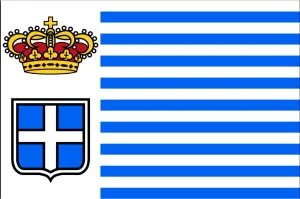
6). The flag and coat of arms used by Mrs Dobler are said to represent the former principality of Sabourg.
False. The flag and coat of arms of the principality of Seborga are the product of Carbone's imagination. Looking at the flag, on the left one finds the arms of the Greek monarchy — indeed the arms of the Italian monarchy repainted in blue rather than red — and on the right the nine blue bands representing the nine founding knights of the Order of the Temple; we repeat that there is no evidence that the Templars had any link whatever with the monks of Seborga and Lérins.
7). Is the title His Serene Highness (H.S.H.) a religious title?
False. The title Giorgio Carbone took when he proclaimed himself, still used today by Mrs Nina Dobler, is a dynastic title used exclusively by monarchs or aristocrats, not by religious.
8). Does the Petit Louis still exist at Seborga?
False. The Petit Louis, the historic currency of the Principality of Sabourg, has not been in force since 1671. In 1995 Mr Giorgio Carbone, probably for tourism reasons, created a coin called the “Luigino”, still on sale at Seborga.
It is clear that the principality of Seborga, a student-style institution founded by Giorgio Carbone and maintained by his supposed successors, has no legitimate link with the Principality of Sabourg.